

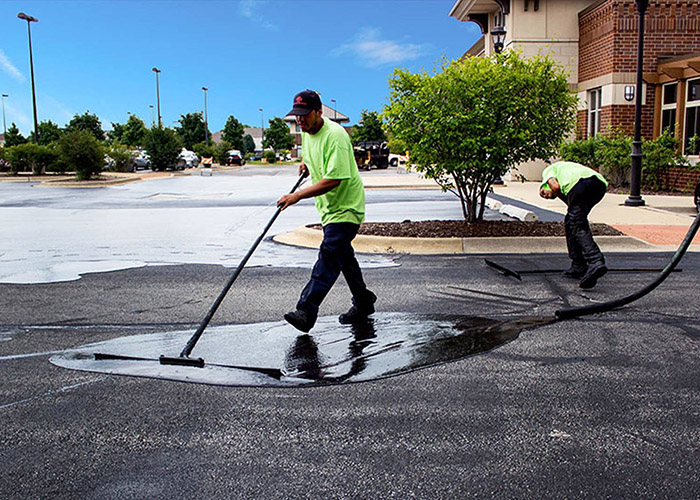
 If you manage a commercial property in Naperville, basic asphalt repairs like crack filling and patching probably feel familiar. They fix visible problems, pass a quick inspection, and keep traffic moving.
What they do not do is stop the bigger forces that break asphalt down across DuPage County year after year. Sealcoating addresses those forces head-on, especially in high-traffic parking lots along corridors like Ogden Avenue and Route 59.
Below, we break down where sealcoating goes beyond patchwork fixes and how to plan it the right way for Naperville properties.
Key Takeaways
- Sealcoating protects asphalt from UV exposure, water infiltration, and chemical damage that patching alone cannot address.
- Naperville’s freeze-thaw cycles make surface protection critical for long-term pavement performance.
- Proper timing and coordination reduce disruption for tenants and customers.
- Choosing a contractor with local commercial experience improves durability and compliance.
How Sealcoating Protects and Extends Asphalt Beyond Patchwork Fixes
Sealcoating works at the surface level, but its impact reaches deep into the pavement structure, especially in Chicagoland’s freeze-thaw climate.
Shields Asphalt From UV and Oxidation
Sun exposure is a constant in open commercial lots around Naperville, from office parks near I-88 to retail centers off 75th Street. UV rays oxidize asphalt binder, making pavement brittle and gray.
Patching a pothole does nothing to slow that process. Sealcoating forms a protective barrier that blocks UV exposure, helping the asphalt retain flexibility and reducing the rate of surface raveling that leads to widespread cracking.
Seals Out Water Before It Reaches the Base
Water infiltration is one of the most expensive problems for commercial asphalt. Once moisture reaches the aggregate base, freeze-thaw cycles common in Naperville winters cause heaving and structural failure.
Crack filling treats individual openings, but it leaves the surrounding surface exposed. Sealcoating locks out surface water across the entire lot, which is critical for large parking areas serving medical offices, warehouses, and multi-tenant retail sites.
Resists Chemical Damage From Oils and Deicers
Commercial parking lots see constant exposure to motor oil, fuel drips, and winter deicing chemicals. In DuPage County, salt application is heavy during icy conditions, and untreated asphalt absorbs those chemicals quickly.
Sealcoating creates a chemical-resistant layer that slows softening and breakdown, reducing the need for emergency patching after harsh winters.
Improves Visibility and Safety Compliance
Sealcoating restores a dark, uniform surface that makes striping and markings stand out. For commercial properties, that matters for ADA-compliant parking stalls, fire lanes, and pedestrian crossings.
Fresh sealcoat allows striping paint to bond properly, which helps maintain visibility and compliance during inspections without constant remarking.
When to Schedule Sealcoating in Naperville and What to Look for in a Contractor
Timing and contractor selection determine whether sealcoating delivers long-term value or becomes a short-lived cosmetic fix.
Best Seasonal Windows For Naperville Conditions
Sealcoating requires stable, dry weather with temperatures typically above 50 degrees. In Naperville, that usually means late May through early September. Spring sealcoating works well after winter damage has been repaired, while early fall applications can prepare pavement for the snow season.
Scheduling around major tenant traffic patterns, such as weekend retail peaks or weekday office hours, minimizes disruption.
Pavement Conditions That Signal It Is Time
Commercial asphalt does not need to be failing to benefit from sealcoating. Fading color, minor surface cracking, and increased water absorption are common signals seen in parking lots five to seven years old around newer developments near Wolf Road.
Sealcoating at this stage can delay major rehabilitation and protect the original pavement investment.
Coordination With Striping and Traffic Flow
For busy commercial sites, sealcoating is rarely a standalone task. It often pairs with restriping, directional arrows, and ADA updates.
A qualified contractor plans phasing so sections of the lot remain accessible, which is especially important for medical facilities and multi-tenant properties with limited overflow parking.
Contractor Qualifications That Matter Locally
Not all sealcoating is equal. In Naperville, contractors should understand local soil conditions, drainage patterns, and access constraints typical of suburban commercial developments.
Experience working around IDOT-adjacent entrances, HOA guidelines for shared lots, and local permitting requirements helps avoid delays. Proper surface preparation, correct material mix, and clear cure-time communication separate long-lasting results from short-term fixes.
Schedule Commercial Sealcoating With Confidence
Parking lot deterioration rarely starts with a dramatic failure. It starts quietly, season after season.
At Maul Paving Inc., we help Naperville commercial property managers protect their asphalt before small issues turn into capital expenses.
If your lot is due for sealcoating or you are planning ahead for the upcoming season, reach out to us. Let’s schedule a site walkthrough and build a maintenance plan that fits your property and traffic patterns.
Frequently Asked Questions
How often should our commercial lot in Naperville be sealcoated?
For most commercial properties, sealcoating every two to three years is typical, depending on traffic volume and exposure. High-use retail lots near Route 59 may need more frequent applications than low-traffic office parks.
Can sealcoating be done without shutting down our entire parking lot?
A phased application is common for commercial sites. Sections are sealed and cured in stages, allowing continued access for tenants and deliveries while maintaining safety.
Does sealcoating replace the need for crack filling or patching?
Sealcoating complements, not replaces, repairs. Cracks and damaged areas are addressed first, then sealcoating protects the repaired surface and surrounding pavement.
Are there compliance issues we should consider during sealcoating?
ADA striping, fire lanes, and accessible routes must be restored accurately after sealcoating. Working with a contractor familiar with local and federal guidelines helps ensure inspections go smoothly.

 DIG INTO A


